
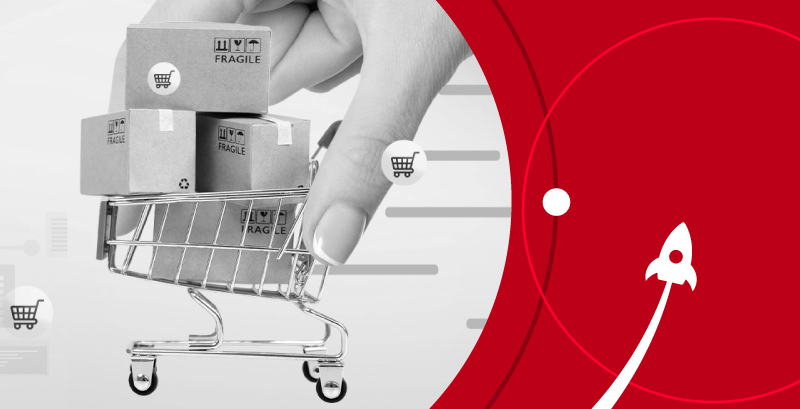
With the pandemic, it is not surprising that the retail sector is one of the most booming today; people have acquired new shopping habits, and the retail market has had significant growth. These stores are also experiencing a massive demand for goods through online sales, which is where it has stood out the most.
The retail world is rapidly adapting to the opportunity to acquire and retain new customers, so it is not surprising that new technologies are being used to meet these growing demands. Automation encourages and facilitates the advancement of these markets.
Given customers' demands, both for traditional and electronic commerce, the retail industry has been filled with processes that are used to achieve positive dividends, and agility has become the fundamental premise. Avoiding mistakes and confusion in sales can make companies stand out to reach a constant, loyal consumer audience.
Many processes, thousands, millions; from ordering products from suppliers to dispatching and delivering goods to the customer's door; from supply chain to sales analysis. Doing everything manually is becoming a thing of the past, given the time delays, errors, and potential losses, and no one wants to lose money, let alone a loyal customer. This is where RPA comes in with a significant impact to meet the demanding requirements of this world. Human capabilities to manage and administer this new way of doing retail business are being left behind. Automation appears to assume the high demands of the market.
Looking to learn what RPA is and how it could benefit your company in detail? Here you will have the answers.

RPA serving Retail
The RPA in the Retail industry can perfectly meet the fundamental processes executed in these stores, i.e., product scanning, data analysis, and inventory management. RPA can solve most administrative processes, obtain favorable results in advanced audits, improvements in customer service, cost reduction, higher productivity, better service, and indirectly a positive positioning of the brands.

How does Retail apply RPA?
In returns management
Being customer-oriented is one of the best practices, especially when there are returns, as this situation can be sensitive, especially when it comes to online commerce. Returns come at a cost to the retail company; processing these situations manually can be time-consuming and could leave the customer dissatisfied. RPA skillfully handles returns and manages changes to inventory databases, invoices and/or credit notes if necessary.
Examine case studies where RPA has been implemented in this thriving Retail / Ecommerce industry
In the Workflow
Retail is essentially a human-driven industry, and customer interaction is something that must be done manually. But with the use of RPA, workflow management and other human resource processes can be facilitated more productively. Whether it's assigning shifts, measuring time and attendance, auditing sales, payroll and leave management, or evaluating employee performance, everything becomes more accessible with robotic process automation.
In customer service
With the increasing focus on customer satisfaction, customer service has become an integral part of the retail industry. Especially in e-commerce, providing 24/7 customer service and sending real-time updates to customers has become really important. Companies can make their customer service faster and more convenient with robotic process automation.
The system tracks and sends real-time updates to the customer from the moment an order is placed. This process does not end even at the delivery time; an efficient customer service system even collects post-sale feedback from customers. RPA thus facilitates the saving of a lot of time, money, and effort.
In Enterprise Resource Planning Management
RPA-based enterprise resource planning is the breakthrough after automated inventory management. From tracking price changes, invoicing, and employee vacancies to generating reports like accounts payable and accounts receivable, Enterprise Resource Planning managed with RPA automates everything and minimizes human efforts. With the integration of warehouse inventory and sales, an automated ERP ensures that you never run out of resources for your organization.
In Accounting and Finance
Over the years, skilled professionals have mainly managed accounting and finance functions, but over time technological advances have required faster actions, error reductions, and a smoother workflow. RPA does just that. In an era characterized by digital transformation, order and invoice processing accounts payable and accounts receivable management, account reconciliation, purchase-to-pay, order-to-cash, record-to-report cycles, consolidation of account information, among many other tasks, can be managed through RPA.
For example, financial close involves many tasks ranging from closing accounting books to creating financial files and then submitting them to various regulatory agencies. This involves working with different individuals and systems in multiple departments. The process is cumbersome, and RPA can quickly mitigate this.
Transactions between various departments and divisions must be recorded, maintained, updated, and consolidated. RPA can collect and consolidate transactions and reconcile them in ERP. RPA can speed up all these processes, save time and reduce costs.

In Marketing and Consumer Behavior Analytics
Reliability and speed are crucial for retail in marketing and consumer behavior analysis. The rate of analysis and decision-making would help provide an edge over other retailers in the industry, and perceived reliability by customers will spread positively by word of mouth. Adoption of RPA would offer both.
Campaign analytics is another area where RPA is applied. It is an essential tool that helps marketers evaluate their current actions and decide on their future course of action. It provides clarity in determining campaign objectives, the campaign budget, and the specific channels that require improvement.
The primary benefit RPA provides here is that past actions can be performed repeatedly in the future without manual effort. If the retailer modifies strategies based on the analysis, RPA will help measure the effectiveness of the new strategy.
Product categorization is one of the most important but ignored functions in the retail industry. Customers are unable to find numerous products online due to poor product categorization. With more than one million products sold, retailers now integrate RPA to assign attributes and categorize products for a seamless customer experience.
In addition to these, RPA, when used in consumer behavior analysis, drives effective trade promotions, store-specific planning, new product introductions, customer onboarding from websites, subscription renewal management, claims processing and complaint handling, and loyalty card management.

In supply and demand planning
In the past, supply and demand planning was a cumbersome task that involved searching and collecting data fragments, standardizing and formatting them, running simulations, finding exceptions, and finally confirming and communicating the plan. These tasks can be automated and simplified using RPA technologies.
Adopting RPA technologies would help retail increase capacity and asset management and improve customer, supplier, and employee satisfaction. RPA makes retailers' lives easier!

En la logística y gestión de la cadena de suministro
La gestión eficiente de la logística y la cadena de suministro permite a las organizaciones globales trasladar sus productos de los proveedores a los consumidores, monitorear el nivel de inventario y rastrear el envío para que los materiales se entreguen a tiempo. La cadena de suministro es un objetivo popular para RPA, ya que estos procesos dependen en gran medida del back office.
Dado que la comunicación es esencial para el éxito de la cadena de suministro, la automatización de los correos electrónicos facilita una mejor comunicación entre clientes, proveedores y distribuidores. RPA ayudaría a automatizar un correo electrónico o mensaje de texto cuando se reserva, envía, retrasa o entrega un pedido.
RPA es útil para mantener los niveles de inventario para garantizar que el retail tenga suficientes productos y servicios para satisfacer la demanda. Se pueden generar notificaciones cuando los productos alcanzan niveles alarmantemente bajos o de umbral. Después de evaluar los pedidos anteriores, RPA puede ayudar a determinar los niveles óptimos de pedidos para mejorar la adquisición, reducir los costos y reducir el desperdicio.
A medida que los minoristas se apresuran a adoptar RPA por temor a quedarse atrás de los competidores de cruceros, solo se están moviendo hacia tecnologías que traerán más beneficios y les permitirían competir con confianza.
En definitiva
Los casos enumerados anteriormente son las tareas más comunes que se pueden usar para la automatización en retail a través de RPA, pero hay varias otras tareas en una organización donde se pueden minimizar los esfuerzos humanos y los errores humanos y se puede hacer una utilización óptima de los recursos valiosos.
El uso de la Automatización Robótica de Procesos elimina la necesidad de realizar muchas tareas manuales que los empleados generalmente deben realizar. Según las estadísticas, es posible ahorrar billones en la fuerza laboral global al automatizar casi la mitad de las tareas realizadas por humanos y cuando se trata de una industria pujante como la venta de retail, el uso de la automatización robótica de procesos se vuelve aún más importante. ¡Libere el potencial de su fuerza laboral y aproveche al máximo RPA para una mejor productividad y costos más bajos!

 EN
EN  ES
ES  PT
PT