
And in common words
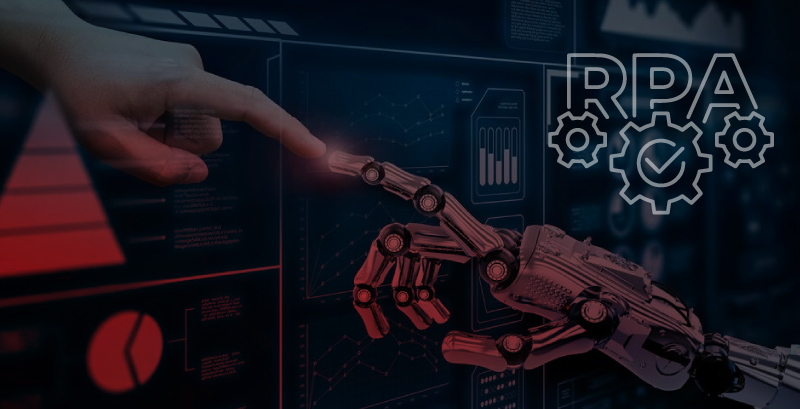
R. P. A. stands for Robotic Process Automation.
RPA is a robotic process automation technology; virtual robots, software that mimics human interaction with business processes located on digital platforms, such as computers, servers, and the cloud.
What is the raw material that RPA works on?
This technology works with digital files: photos, texts, emails, excel, word, document scans, PDFs, etc. The tasks it can perform are moving files and folders, opening emails, generating automated responses, extracting data from websites, extracting structured or semi-structured information, to mention just a few.

To not confuse us and not make prejudices, what is not RPA?
We want this technology to be like science fiction, but neither Bender from Futurama, Mazinger Z, or Optimus Prime.
It is not artificial intelligence or automatic learning. It is somewhat more straightforward, the RPA is software that performs specific and repetitive tasks, analyzing the variables or according to the activities we want our bot to function.
These robots are created to mimic practical human behavior: they will perform the same things that a worker does on a computer or the Internet. The RPA will not emulate human intelligence; it is far from that. Still, it will be able to emulate constant and repetitive actions and precisely perform them without making t1p30 mistakes and in a very agile way.

Now, what is RPA?
It is software created to perform actions as if you were in front of a computer. The main objective of RPA is to replace mechanized and highly repetitive manual work with a program that hardly a human being could cope with in terms of speed and effectiveness.
To perform millions of repetitive functions, it is not necessary the presence of humans, nor their intelligence, since the software robot will not make decisions, but it will execute what you have programmed it to do; therefore, let's not be afraid that the bot will have unexpected reactions.
Using RPA automation will allow human workers to focus on reflective, critical, evaluative, qualitative, meaningful work since time will not be spent doing work that generates annoyance and exhaustion. We will leave the tedious work to the robot, which will not complain about the high pressure delegated to it.

What could the RPA perform in the company?
High-volume, repetitive, constant, rule-based tasks.
Quickly execute our business requirements.
The ability to execute processes many times faster than humans and without making mistakes gives value to this technology, which would be reflected in the company's efficiency.

The robot will be a worker 24 hours a day
Every day of the year, without vacations, without vacations, without getting sick; attentive and willing to fulfill its task for which it was conceived. It will increase the productivity of your business as soon as you put it to work.

Reliable
We will not say that your human workers are unreliable; their value is precisely in being human, possessing intelligence, and solving complex situations; we do not refer to this. The robot will have the necessary precision to not make mistakes for what it was programmed for.

Flexible and scalable
Software robots can be used in different scenarios and perform a few processes. Still, they can also sustain heavy workloads, i.e., the number of actions they can perform can be increased.

Low cost
Activating RPA in your company could generate a cost reduction.

No new investments in infrastructure are necessary
You will be able to use all the equipment you already own.

Fast ROI
From the moment RPA is implemented, it will take a short time to see the results in terms of investment.
What processes could be automated with RPA?
The ideal processes are those that are highly manual and highly repetitive. These processes should have a high execution frequency and should also have a high volume of operations.
The process formula must remain constant over time; variable processes are ineffective with RPA. If any process changes, it will be necessary to update the robot functionality to adapt to the new scenario.
Workflows will have unambiguous and precise instructions, considering all possible variables based on very standardized and predictive rules.
RPA for Billing
Here is an emblematic example to be a candidate for automation
From the smallest business to the mega-corporation must perform invoicing; this process can be embraced by automation through RPA.
Invoices can commonly be a challenge to process for the teams in charge since suppliers deliver invoices in different formats, spreadsheets, PDF, Word, Excel, paper, email, etc. Therefore, a human must manually load all the information from these sources into a database for further processing. Yes, it is repetitive work and prone to typing errors. This is an excellent candidate to win an automation bot.
How does RPA address this challenge?
Whatever their origin, format, and RPA, all invoices can process EVERYTHING. Paper invoices can be scanned so that later our bot can identify all the necessary information to unify and transfer it to an orderly and operational database. And that's not all; the bots will be able to follow up, or simply receive and finalize payments, EVERYTHING, from start to finish, without help and in a matter of minutes.
RPA is proposed as an effective solution to the requirements that companies, enterprises, SMEs, industries, governments, or institutions have in order to optimize time and provide services in line with today's modern needs.
If you are looking to automate your company, request a meeting, and we will solve all your doubts.

 EN
EN  ES
ES  PT
PT