

Throughout history, we realize that innovation and the avant-garde always generate, at first instance, rejection for being unknown and for the customs that have been ingrained for a long time.
The next column will explain why we should go down the path of digital transformation to achieve the improvement and fullness of our potential as human beings and decide to use technologies that can free us from the tedium of non-human jobs, which are highly mechanized.
Some history of rejection
The transformation of the world, science, technology, humanism, and almost all human disciplines have seen, over time, opposition arguments. The writing was questioned; capturing something in characters meant a detriment to the use of memory, which could stupefy humanity since we would not make use of our intellectual faculties, delegating our memories, our history, our humanistic advances to writing. This was expressed by Plato referring to the ideas of Thamus, master of Egypt.
Church
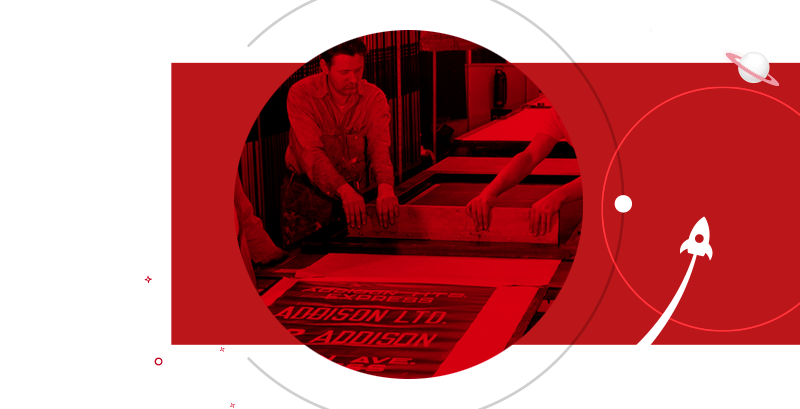
Many years later, in the fifteenth century, the church resisted the invention of Gutenberg's printing press since the monks guarded the knowledge. The democratization of written knowledge could sow ideas contrary to the clergy or kings. They were darkening the intellectuals of the time and propagating obscurantism.
Industrial revolution, electricity, cinema, radio, television, the internet, automation
We realize that every technological advance throughout history has generated an option. The changes in paradigms and the inevitable development of humanism hand in hand with technology have meant that we continue on the path of progress.
Each of the advances in the world has been the focus of questioning, but without a doubt, this continues to make substantial progress; it is no longer possible to generate setbacks. Automation, like other technologies, also receives an inquisitive analysis. But as in the cases mentioned, it ends up being accepted.
Automation and jobs
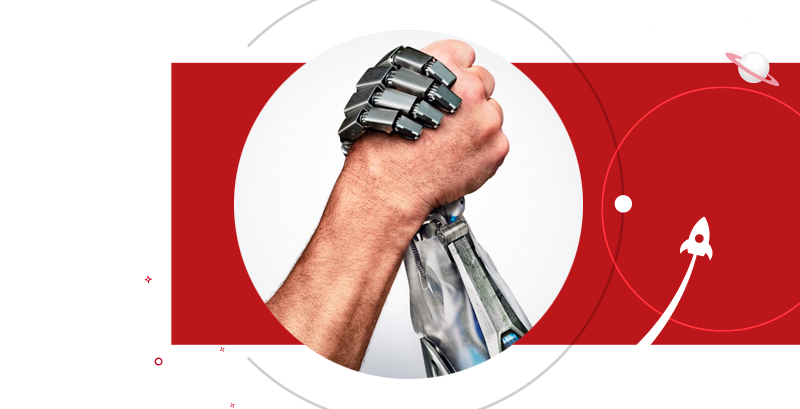
Although some are alerting the public about the loss of jobs due to automation, suppose you think in general and superficial lines. In that case, it is such, but we should face this situation by valuing human activity as a unique and unrepeatable specialty, where everyone has their own skills. You are far removed from mechanized and monotonous work. We humans can stand out as what we are, not degrade ourselves to fulfill repetition functions, with gigantic volumes of workload and high levels of stress.
Then we can use our reasoning to take advantage of human skills for better development, in this case, in the company. Define that machines carry out specific tasks to give us more time, freedom, and value in our activity. We are giving a better lifestyle and ensuring our health and our workers.
Who would not like technology to assist us in tasks that are not so pleasant, and that this work given to robots be carried out with an unequivocal eye and freeing us to carry out our human activities. We can hide behind a digital workforce to provide support and security before delicate functions requiring robotic accuracy.
We are in a stage of technological development where there is a structural change in society, and our work is valued according to our health and the social life we lead.
In any case, there is a challenge from companies, corporations, and governments to rethink human value, where training plays a fundamental role so that we can climb to the following levels of human development, with greater awareness and evolution of society.
We must not put ourselves at the level of machines; if we have developed these technologies, it is not to compete for jobs; work must be reformulated. At present, robots have not been able to develop creativity, empathy, or understanding as we do; the robot is concrete. It will not know how to improvise, solve, and reason. That is when the human does not lose work ground.
Jobs that we humans will stop doing
With the high demands that companies, institutions, and governments have today, where large volumes of information are handled, speed has become a premise. The increased demand for data has given rise to automation standing in an important place.
Today, you can count on a digital workforce for customer service, where software robots are available 24 hours a day, 365 days a year, on weekends and holidays; This has largely freed us from pending requests and claims, freeing humans from working uncomfortable hours.
All that information available on the servers can be reviewed by the robots to be extracted and compiled for the generation of reports, graphs, statistical calculations, and many other things.
In conclusion
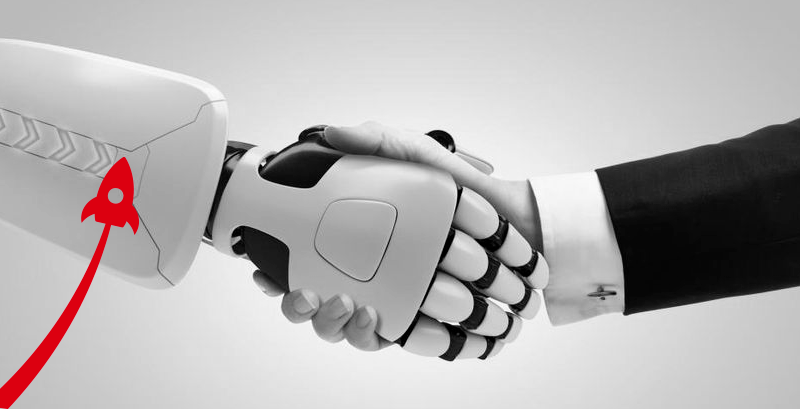
With automation, humans will have the collaboration of robots at our disposal to increase productivity, since they do not rest; robots will be able to do multiple tasks that we program for them; They will not make mistakes in the functions that we determine them to do, and they will be precise in their work.
We will be able to be more liberated; we will gain time to take breaks, vacations, and have a social life. We will make our activities creative, intuitive, and emotional. We will be available for further personal development and training to face the new challenges of the future of work.

 EN
EN  ES
ES  PT
PT